WHEN VALUES AND PRIORITIES COLLIDE
Last week, I wrote about urgency. The week before that, I wrote about values.
But in real life, those two ideas don’t live in separate blog posts. They collide. Every single day. Because you can’t prioritize well if you don’t know what’s important. And knowing what’s important isn’t helpful if you don’t know what’s actually due.
That intersection — between values and deadlines — is where clarity either strengthens… or slips.
Why Values Matter Before Priorities
If you don’t know what matters most in this time of your life, everything will feel equally important.
At home, that might look like:
• Saying yes to every activity
• Filling weekends without pause
• Working late because “it needs to get done”
At work, that might look like:
• Treating every email as urgent
• Jumping into every issue personally
• Adding initiatives without removing anything
When values aren’t clear, prioritizing becomes reactive.
The Role of the Priority Matrix
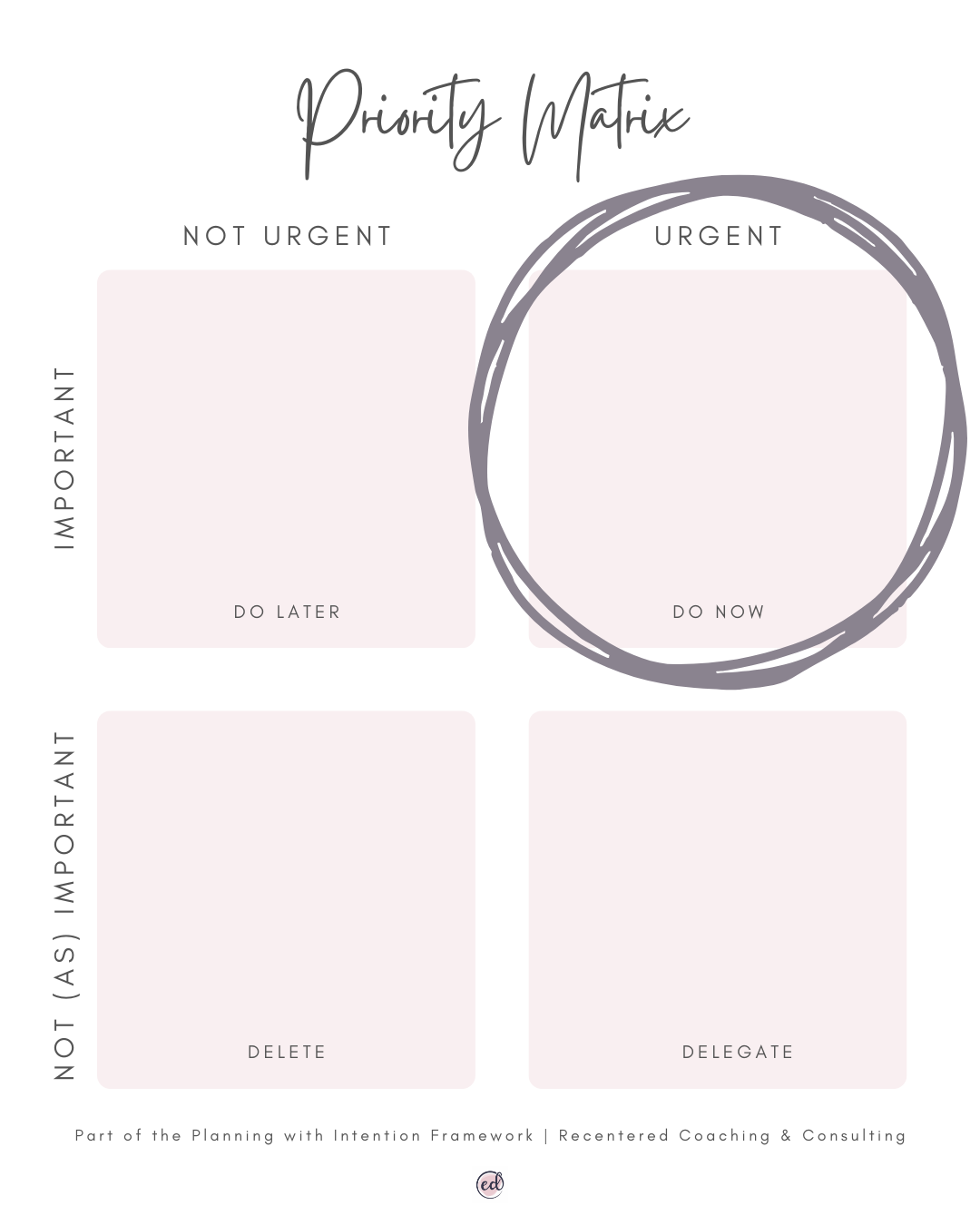
The Priority Matrix is helpful because it gives language to what we already sense:
Is this:
• Urgent and important?
• Important but not urgent?
• Urgent but not important?
• Neither?
But here’s something important: When something unexpected pops up, it doesn’t make sense to pull out the chart.
In that moment, the question becomes simpler: Is this both urgent and important? If it isn’t, it likely doesn’t deserve to replace what you already decided mattered.
Real-Life Example: At Home
Let’s say: You planned a quiet evening with your family.
An email comes through about a non-urgent work issue that could technically wait until tomorrow. It feels urgent because it’s sitting in your inbox. But is it urgent and important right now?
If family time is a lived value, the answer might be no.
The email is important. It’s just not urgent in this moment. That clarity changes the decision.
Real-Life Example: At Work
You blocked two hours to plan next month’s programming.
Midway through, a staff member knocks on your door frustrated about an email they received from a client/upset parent/fellow colleague.
Is it urgent and important? If it’s a safety issue — yes.
If it’s a preference that can be addressed in tomorrow’s check-in — probably not.
Strategic planning is often important but not urgent. And because it’s quiet work, it’s the first to get displaced. Over time, that’s how systems drift.
Where alignment Lives
Values tell you what matters. Deadlines tell you what’s time-sensitive.
The Priority Matrix helps you decide what deserves immediate action. But the skill isn’t in drawing quadrants. It’s in building the reflex to pause and ask:
Is this urgent and important? And if it isn’t, can it wait?
A Small Practice This Week
Before reacting to something that disrupts your day, pause for five seconds.
Ask: Is this urgent and important? If yes — move. If no — protect what you already chose.
That’s not rigidity. That’s alignment in motion.
Next week, I’ll share more about how blocking time in your calendar supports this kind of clarity — because protecting what’s important requires more than awareness.
For now, just notice.
Where are your values and your priorities working together… and where are they competing?