Creating Life Rhythms That Protect What Matters
Over the past few weeks, I’ve been writing about values, urgency, and priorities. Values help us name what matters most. The Priority Matrix helps us decide what deserves attention when everything feels urgent.
But there’s another challenge that often shows up after that clarity: Even when we know what matters…it still doesn’t always happen. Not because we lack discipline. But because our time is scattered.
A few minutes here. A task there. An interruption that shifts the whole day.
Without some structure to our time, priorities easily get pushed aside by whatever feels most immediate.
This is where something I call Life Rhythms becomes helpful.
What Life Rhythms Actually Means
Life Rhythms is simply the practice of noticing what activities naturally repeat in your life or work and grouping them together instead of scattering them throughout your week.
Another way to think about it is reducing task switching. Every time we move between very different types of work, our brain has to shift gears. That shift takes energy and time.
When we begin to notice patterns and group similar activities together, our days become calmer and more focused.
What This Can Look Like in Real Life
Life Rhythms can look different for everyone. Some people notice rhythms around communication, planning, errands, meals, or administrative tasks.
For example:
At work, you might notice that communication tasks show up constantly throughout the day.
Instead of answering messages all day long, you might create a rhythm around communication that includes:
Communication & Follow-Ups
• Responding to email
• Returning phone calls
• Following up with colleagues
• Quick check-ins or clarifications
By grouping those activities together at certain times of the day, you reduce the constant back-and-forth switching between tasks.
At home, you might notice that meals create their own rhythm.
Meals
• Weekly meal planning
• Creating a grocery list
• Grocery pickup or shopping
• Basic meal prep
When those activities happen together instead of scattered throughout the week, they require far less mental energy.
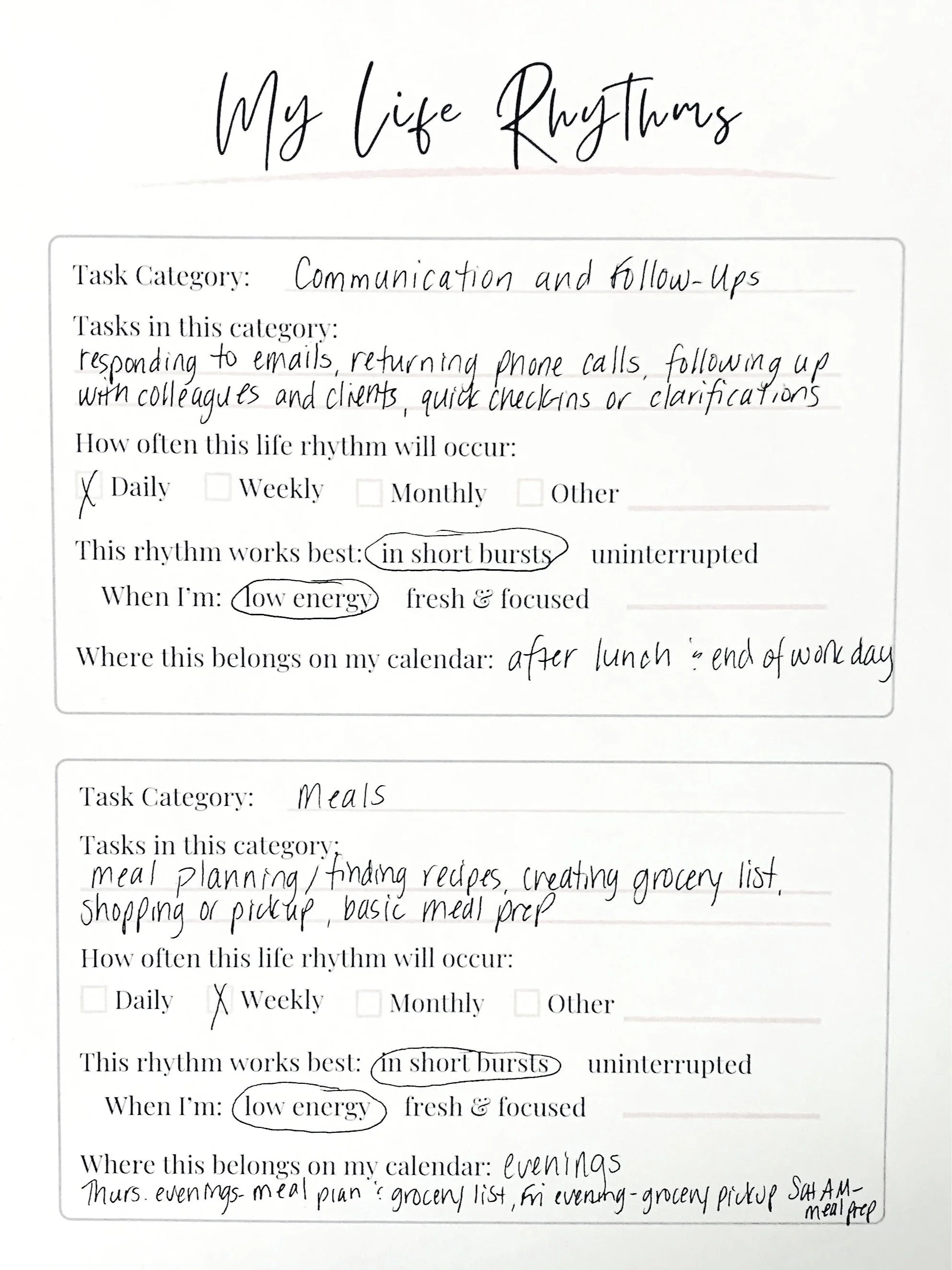
Example of a Life Rhythms page identifying recurring work and home activities.
Try the life rhythms reflection tool
Because these rhythms can be difficult to see when we’re in the middle of busy weeks, I created a simple reflection tool called Life Rhythms.
If you already have the Planning with Intention workbook, you’ll find this reflection page inside the workbook as part of the short-term planning section.
If you don’t have the workbook yet, you can explore and download the Life Rhythms reflection tool here.
Download the Life Rhythms reflection tool
Why This Matters
Priorities help us decide what matters. Life Rhythms help us create the structure that allows those priorities to actually happen.
Without that structure, even the most important work can easily be pushed aside by whatever feels urgent in the moment.
A Gentle Place to Begin
You don’t need to redesign your entire schedule this week. Just begin noticing.
What activities naturally repeat in your days? Which ones might benefit from being grouped together?
Sometimes clarity doesn’t come from doing more. It comes from creating rhythms that protect what matters most. When our time has some natural structure, priorities stop competing for attention quite as loudly. They begin to find their place.
Next week, I’ll build on this idea by sharing how time blocking helps protect these rhythms so they don’t immediately disappear when urgent tasks show up.
For now, simply start paying attention to the patterns already present in your days. You might be surprised by how much clarity they offer.