When Everything Feels Urgent
There’s a particular kind of exhaustion that doesn’t come from working long hours. It comes from reacting all day.
Emails.
Last-minute requests.
Meetings for the sake of meetings.
Problems that feel immediate — even when they aren’t essential.
By the end of the day, you’ve been busy the entire time… but you’re not sure you moved anything meaningful forward. That’s not a time-management issue. That’s an urgency issue.
I learned this in a way that I didn’t expect
When I returned to work after having Gabby, I was still breastfeeding. That meant that no matter what came up throughout the day — or who approached me needing help right in the moment — I had to step away at certain times to pump. It wasn’t optional.
At first, I felt guilty stepping away. Prior to being a mom, I was always available to my co-workers and students. I prided myself on being the one people could count on to take care of things immediately.
But something surprising happened. Unless it was truly urgent, I started saying:
“I’m so sorry — I can’t right now, but I can circle back to you later today.”
And the world didn’t fall apart. Questions got answered later. Problems found other solutions. That season quietly reshaped how I think about urgency. It reminded me that availability is not the same thing as leadership. And saying yes to everything is not the same thing as being responsible. Much of what feels urgent… actually isn’t.
Urgency Is Loud. Importance Is Quiet.
Urgent tasks demand attention. To the person bringing you an issue, it often feels urgent to them. But it may not need to be urgent to you.
The important work that often gets pushed aside in the urgency of the moment is usually:
– Strategic planning
– Protecting time for deep work
– Clarifying expectations
– Investing in relationships
– Strengthening systems so fires happen less often
When urgency becomes the default setting, misalignment builds quietly and gradually. Re-centering isn’t about ignoring what’s pressing. It’s about protecting what truly moves the mission forward.
A simple framework: The priority matrix
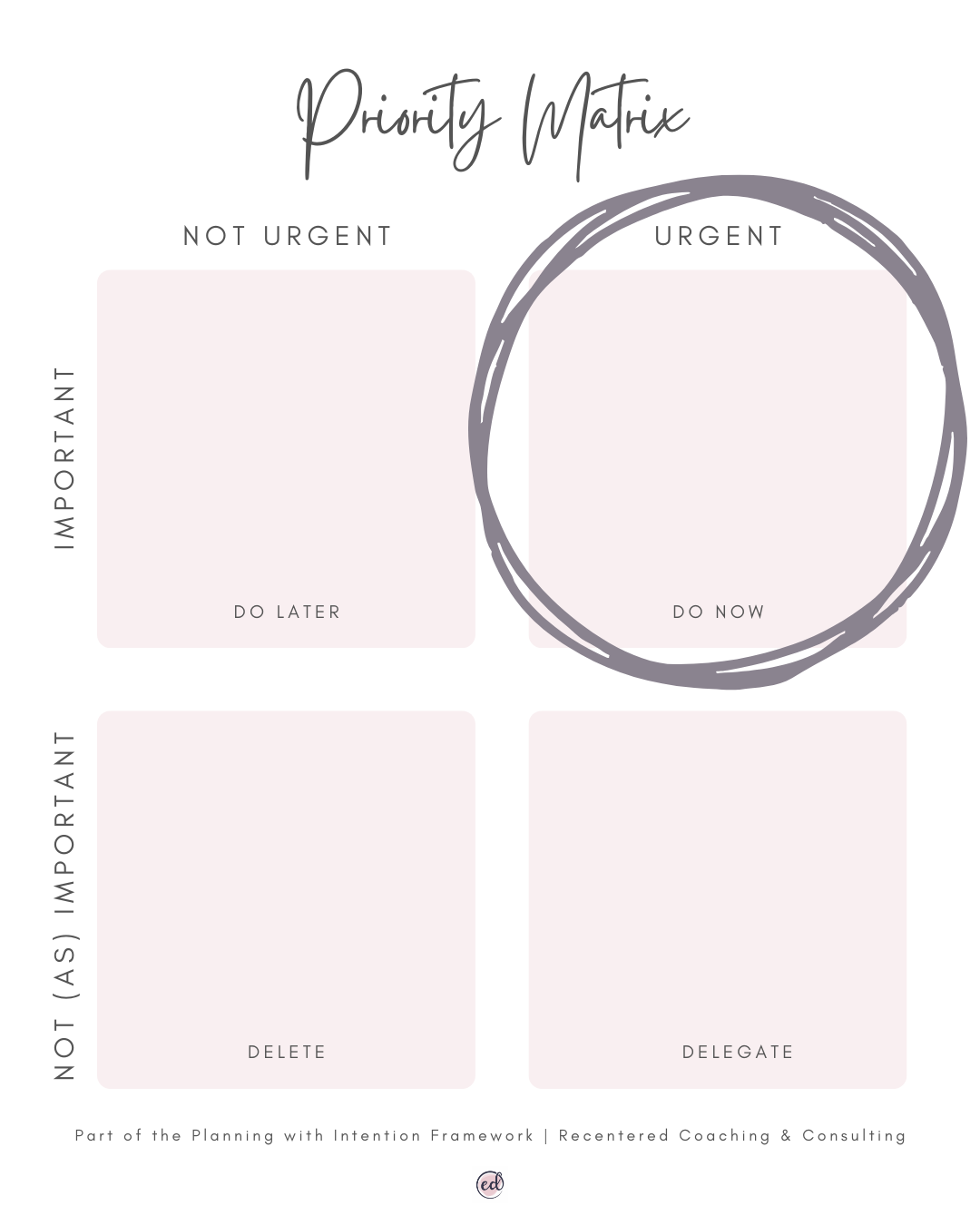
I often come back to the Priority Matrix. It gives language to what we already feel.
Some things truly require immediate attention.
Some things are important but not urgent — and those are often the very things that shape long-term clarity and stability.
Some things can be delegated.
And some things can be deleted.
Everything cannot live in “do now.” When you label everything as important and urgent, burnout follows. Clarity comes from distinguishing between the boxes — and having the courage to act accordingly.
A Gentle Shift
At the end of your next workday, pause and ask: Where can I protect something important this week — even in small ways?
One block of time. One boundary. One conversation reframed.
Because alignment isn’t about doing more. It’s about choosing intentionally. And sometimes it begins with a quiet realization: Not everything urgent deserves immediate access to you.
If your days have been feeling loud lately, you’re not alone. But you are allowed to pause. You are allowed to choose. And you are allowed to protect what matters — even when the inbox says otherwise.
This is the work at the core of Planning with Intention. Not perfection. Just clarity.