Giving Your Priorities a Place
Over the past week, I had the opportunity to connect with over 100 educators, caregivers, and leaders through a series of events. And while every conversation was a little different, there was a common thread:
People know what matters. They’ve thought about their priorities. Many have even started planning with intention. And still…those priorities don’t always make it into their time.
When Everything Still Feels Urgent
Even with the best intentions, the day can quickly become reactive.
Emails come in. Someone needs help. A request feels like it can’t wait.
And because so much of what we do involves supporting other people, those moments feel important. So we respond. And respond. And respond. Until the day is full — but the things that matter most haven’t really moved forward.
Connecting Back to Life Rhythms
In my last post, I wrote about Life Rhythms — noticing the patterns that shape our days.
Time blocking is what allows those rhythms to actually happen.
If communication is a rhythm, you create a space for it. If planning is a rhythm, you protect time for it. If family matters, you make room for it.
Without that protection, even the most meaningful intentions get pushed aside.
The Missing Piece: Giving It a Place
This is where time blocking becomes helpful. Not as a rigid system or a way to control every hour, but as a simple decision:
This matters enough to have a place in my week.
Time blocking turns: “I should do this” into “This is when I’m doing it.”
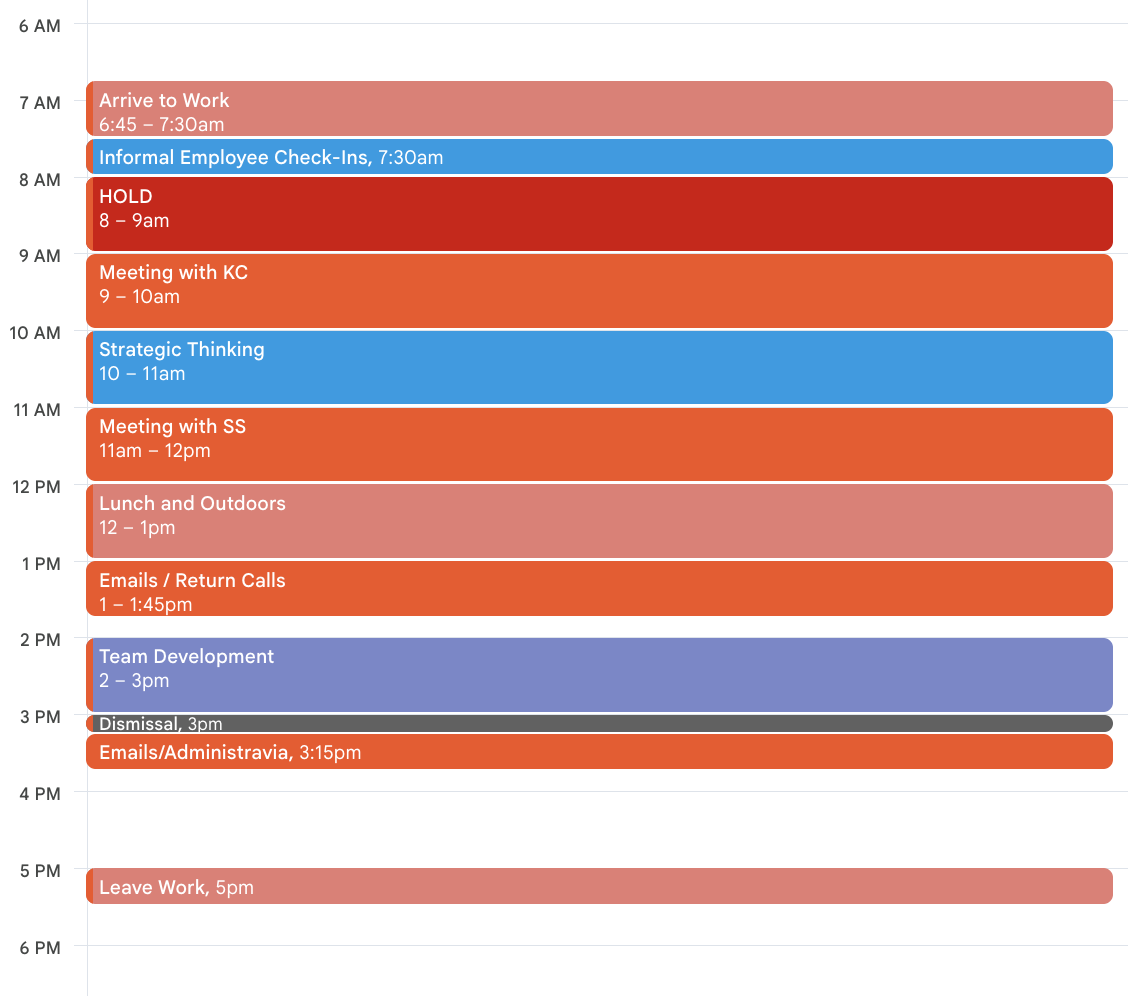
Personal Priorities: Salmon Career/Role Priorities: Blue & Purple
A Small Shift to Try
If this idea resonates, try something simple this week:
Choose one thing that matters to you and give it a place on your calendar. See what happens when something important is no longer competing with everything else.
If you’re finding it hard to hold onto these shifts on your own, I’m opening a small Spring Reset Cohort this April.
It’s a four-week experience where we take these ideas — values, priorities, life rhythms, time blocking, and resetting — and build them into simple, sustainable systems. It’s intentionally small, so there’s space to reflect, adjust, and have real conversations about what actually works.
If you’ve been feeling this tension between what matters and what actually happens in your week, this is exactly the work we’ll be doing together.
You can learn more here: Spring Reset Cohort
A Gentle Place to Land
You don’t need to get this perfect. And you don’t need to overhaul your entire week all at once.
Sometimes the shift begins with something small — noticing what matters, giving it a place, and seeing what happens next.
And if you’ve tried that before and found yourself slipping back into reacting, that doesn’t mean you’re doing it wrong. It just means this kind of change is hard to do alone. Support doesn’t mean you’re behind. It means you’re ready to approach your time with more intention — and a little more steadiness.